top of page

Julius Caesar Act 4, Scene 3: Paraphrase, Notes, Characters, MCQs

PAUL MASIH

16 Dec 2025

The Trial of Friendship, Honour, and Fate

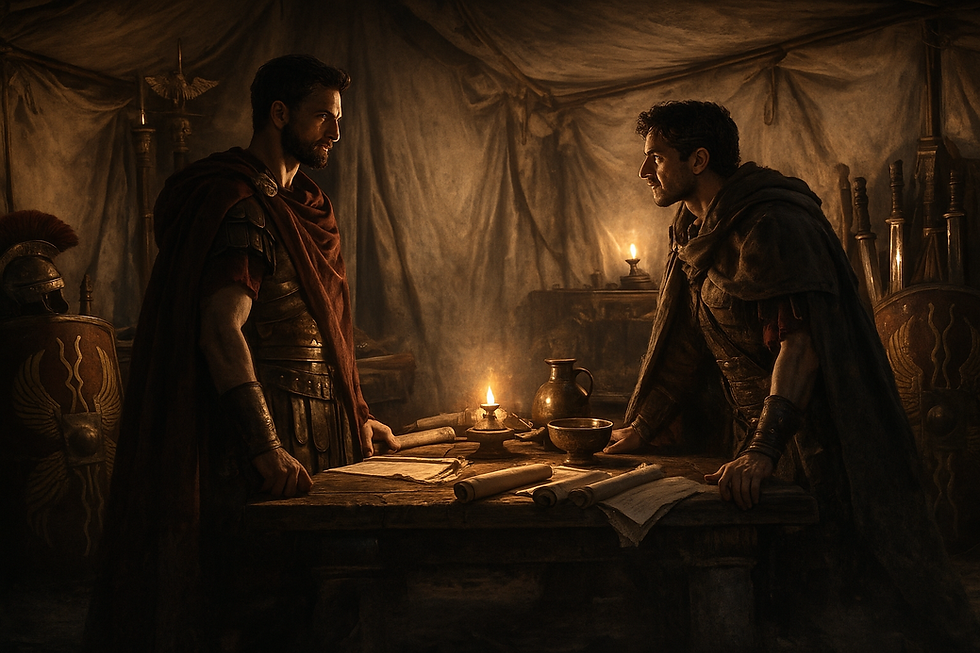
Inside Brutus’s Roman military tent at Sardis. Night. Oil lamps cast warm, flickering light. Brutus (tall, crimson cloak, stern expression) and Cassius (iron-grey cloak, tense posture) stand facing each other near a wooden table with scrolls and a wine bowl. Roman shields and standards rest against canvas walls. Shadows dominate, creating a tense, enclosed atmosphere. Cinematic historical realism, consistent character designs.
Brutus and Cassius are inside Brutus’ tent at Sardis before their argument begins.


Same tent, same lighting. Brutus leans forward, accusing Cassius with controlled intensity. Cassius recoils slightly, shocked and defensive. Scrolls lie open on the table symbolising bribery and letters. Lamp light highlights Brutus’s stern face and Cassius’s wounded pride. No change in costumes or setting.
In the dimly lit tent, Brutus passionately argues against Cassius’s pragmatic strategies, highlighting the tension between his moral integrity and Cassius’s political pragmatism.


Continuation inside the tent. The argument reaches its height. Brutus stands rigid and dismissive, Cassius visibly enraged and hurt. Their enlarged shadows loom on the tent walls, mirroring the fracture between them. Lighting remains low and dramatic, colours unchanged.
Pride and wounded loyalty threaten to destroy the Republican cause from within. The fierce quarrel between Brutus and Cassius reaches its peak.


Continuation inside the tent. The argument reaches its height. Brutus stands rigid and dismissive, Cassius visibly enraged and hurt. Their enlarged shadows loom on the tent walls, mirroring the fracture between them. Lighting remains low and dramatic, colours unchanged.
Cassius’s despair exposes the depth of his loyalty and emotional exhaustion.


Same tent, same lighting. Cassius bares his chest and offers his dagger to Brutus in despair. Brutus stands frozen, conflicted and shocked. The dagger gleams in lamplight. Emotional vulnerability dominates the scene. Characters, costumes, and ambience remain unchanged
In the dim glow of flickering candles, Cassius reveals his deep despair and loyalty, holding out a dagger as a symbol of his emotional exhaustion and inner turmoil.


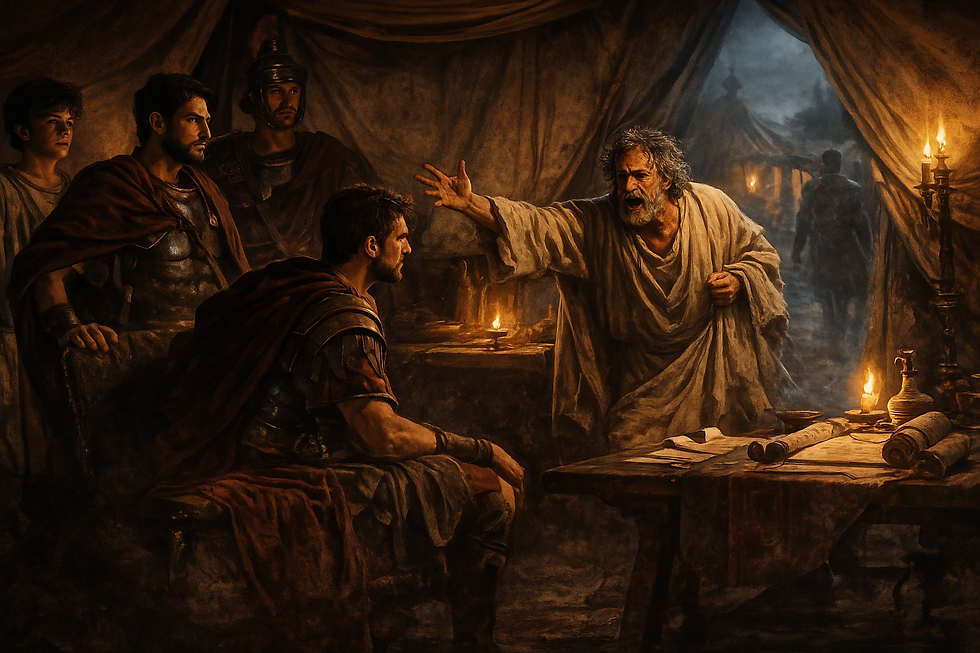
The poet bursts into the tent, gesturing passionately. Brutus and Cassius turn toward him with irritation. Lucius and Titinius stand nearby, surprised. The poet’s plain robe contrasts sharply with military attire. Lighting and ambience remain tense but slightly disrupted
A poet interrupting Brutus and Cassius and urging them to reconcile.


Inside the tent, later. The quarrel has ended. Brutus sits calmly but hollow-eyed near a wine bowl, revealing Portia’s death. Cassius listens in stunned silence. Candles burn low. The mood is subdued and intimate, with the same lighting and colour palette.
In the dim glow of candlelight, two sombre figures sit in quiet reflection, with Brutus embodying stoic endurance amidst personal tragedy.


Late night. Brutus alone in the tent, seated with a book and flickering candle. Lucius sleeps nearby. The ghost of Caesar appears—pale, blood-stained toga, semi-transparent—emerging from the shadows. The candle burns dimly. Supernatural presence restrained and ominous.
In the dim candlelight, a haunted figure confronts its past as Caesar’s ghost looms, embodying the crushing weight of guilt and the dire consequences of betrayal.


Explore the depths of the English language and unearth its treasures with PAUL ACADEMY. © 2024 PAUL ACADEMY. All rights reserved.

  • Pinterest
  • Facebook
  • YouTube
bottom of page